
What’s driving the next wave of automation
Industrial Automation has moved beyond simply replacing manual tasks. It’s now all about innovative, connected ecosystems that learn, adapt, and evolve. Some core drivers influencing this change include:
- IoT and connected devices: these enable real-time communication between machines, sensors, and central control systems.
- Artificial Intelligence (AI) and Machine Learning (ML): empower predictive maintenance, process optimization, and intelligent decision-making.
- Robotics and collaborative robots (cobots): are the drivers for automation in more flexible, safer, and efficient ways.
- Digital Transformation and Software-driven Control Systems: Where hardware (Control Panels, PLCs, SCADA) is integrated with digital platforms for advanced monitoring and control.
- Sustainability and efficiency: Modern automation has made the attainment of energy efficiency, optimization of resources, and minimal wastage achievable for industries.
None of these drivers is in isolation, but in a combination that shapes the future of industrial systems: more reliable, more flexible, and more intelligent than ever before.
How Control Panels Are Evolving
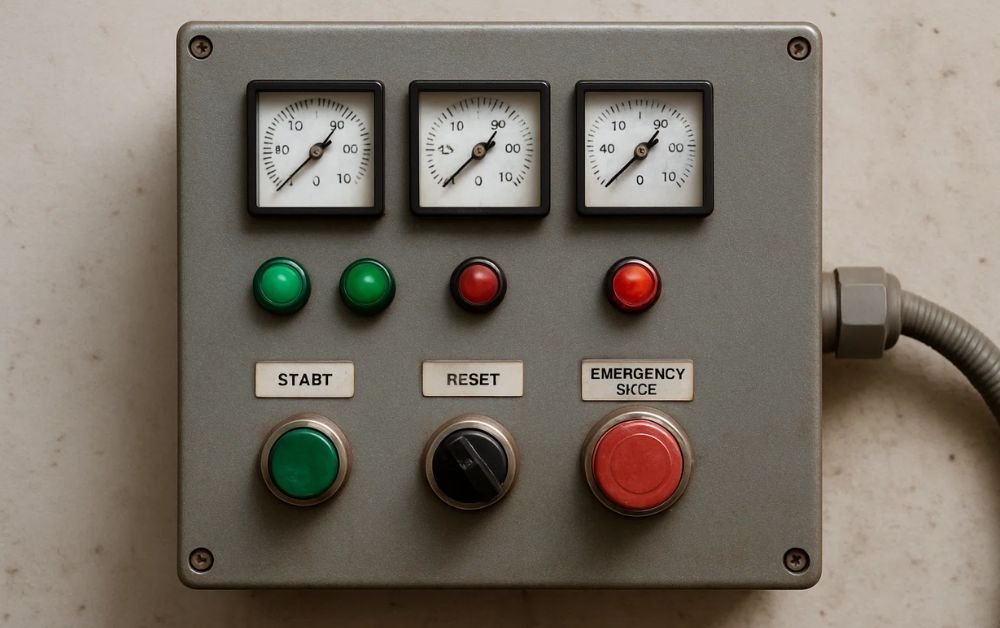
Control panels are often said to be the backbone of industrial automation. But now control panels themselves are underpinning a remarkable transformation:
- Smart, AI-powered control panels: Traditional panels merely executed pre‑defined logic. Today, with AI & ML embedded in them, the panels can analyze real-time data, predict equipment failures, optimize energy usage, and even auto-adjust operations.
- SCADA/DCS/IoT platform integration: The control panels are not stand-alone, but connect through networks that enable remote monitoring, centralized control, data logging, and analytics.
- Modular and flexible architecture: instead of rigid, fixed wiring, modern systems can utilize modular I/O frameworks-e.g., fieldbus/ Ethernet or protocols like AS-Interface- to provide for easier reconfiguration, expansions, and maintenance.
- Digital compliance and quality control tools: Advanced approaches use AI‑driven compliance checking in detecting wiring/schematic errors or misconfigurations, which reduces human error and increases reliability.
- Improved human machine interfaces (HMIs): in other words, panels today frequently feature graphical interfaces along with real-time dashboards, alarms, and commands that provide operators with wider insight and more control over processes.
That means control panels are no longer just static assemblies; they are increasingly turning into intelligent nodes in a dynamic industrial network.
Upcoming Trends to Watch: 2025 and Beyond
As we move deeper into the era of digital manufacturing, more often referred to as Industry 4.0, several key trends shape what the future of automation systems will be:
1. AI‑Driven Predictive Maintenance & Autonomous Control
With AI and ML embedded in the control system, the machines can now self-diagnose and predict failures before they actually happen. This minimizes downtime, maintenance costs, and helps maintain consistent output quality.
2. IoT + Connectivity Enabling Real-Time, Smart Factories
Sensors, edge devices, and connected control panels will stream data continuously. Real-time monitoring and analytics will enable performance optimization, resource utilization prediction, and dynamic adjustments.
3. Modular Automation & Flexible / Adaptive Production Lines
Varying product types can be accommodated by a manufacturing line with modular control panels, flexible I/O networks, and software-defined logic without major rewiring. This opens up possibilities for mass customization and short turnaround times.
4. Collaborative Robotics (Cobots) & Human–Machine Collaboration
Rather than replacing workers, automation will evolve to enable the safe, efficient collaboration of humans and robots in tasks such as assembly, handling, and packaging.
5. Integration of control systems with enterprise IT and data systems: IT/OT convergence
Automation systems will increasingly merge with enterprise IT: data from control panels will feed into analytics, enterprise resource planning, and supply chain planning to enable intelligent decision-making and optimized operations at the organization level.
6. More emphasis on sustainability and energy efficiency
Automation will not only make the process efficient but also help industries reduce energy consumption, minimize waste, and optimize resource utilization. Efficient control, predictive maintenance, and intelligent scheduling will contribute to sustainability.
7. Digitally Assisted Compliance, Safety, and Quality Assurance
New approaches, like AI-driven compliance checking, will reduce human error in the design and installation of control panels and therefore be inherently safer, more reliable, and compliant with standards.
What this means for businesses and industries
Automation upgrade considerations for manufacturers, industries, and enterprises:
- Investing in modern control panels and integrated automation systems can significantly reduce downtime and maintenance costs, thanks to predictive maintenance and more intelligent monitoring.
- The flexibility of modular automation means that businesses can adapt to changing demands sooner, generate tailored production, and scale without massive overhauls.
- AI-powered automation improves not just efficiency but also operational safety and product quality.
- Integration with IoT, data analytics, and enterprise systems provides visibility across operations, driving better, data-driven decision-making.
- Sustainability: An emphasis on energy efficiency and resource optimization translates into automation, which helps industries reach environmental aims and minimize costs.
Essentially, automation is evolving from a cost-cutting tool to a strategic enabler of flexibility, resilience, and competitive advantage.
Related read:-The Difference Between PLC Control Panels and Traditional Panels
Role of trusted partners — the example of Blackwood Hodge Power Services Ltd
With the complexity and rapidly changing face of automation technologies, it is essential to have a partner that is reliable. Blackwood Hodge Power Services Ltd is an example of such a partner, providing end-to-end solutions in areas such as power, material handling, water systems, and control panel automation. This integrated offering makes them not only a supplier but a strategic facilitator for industries undergoing transformation through automation.
Working with a capable provider like them will ensure that there is smooth installation, strong maintenance, and long-term support, which is very crucial to keeping an advanced automated setup running.
Looking Ahead: What the Next 5–10 Years Could Bring
We can expect a number of more profound shifts as technologies continue to mature:
- Widespread adoption of completely autonomous factories: AI‑driven control systems orchestrate production, from raw materials to finished goods, with little human intervention.
- More customization and flexibility, whereby manufacturing lines can quickly switch products depending on demand, are made possible by modular control systems and software-driven logic.
- Improved digital twin and simulation-driven planning enable test runs, predictive modeling, and efficiency in resource allocation, much before the actual production starts.
- Operational technology and information technology convergence: Seamless integration of automation systems with enterprise data platforms, analytics, and supply-chain management systems.
- There will be an increased emphasis on sustainability: energy-efficient automation, waste reduction, and resource optimization will become core to industrial strategy, not just cost-saving measures.
Conclusion
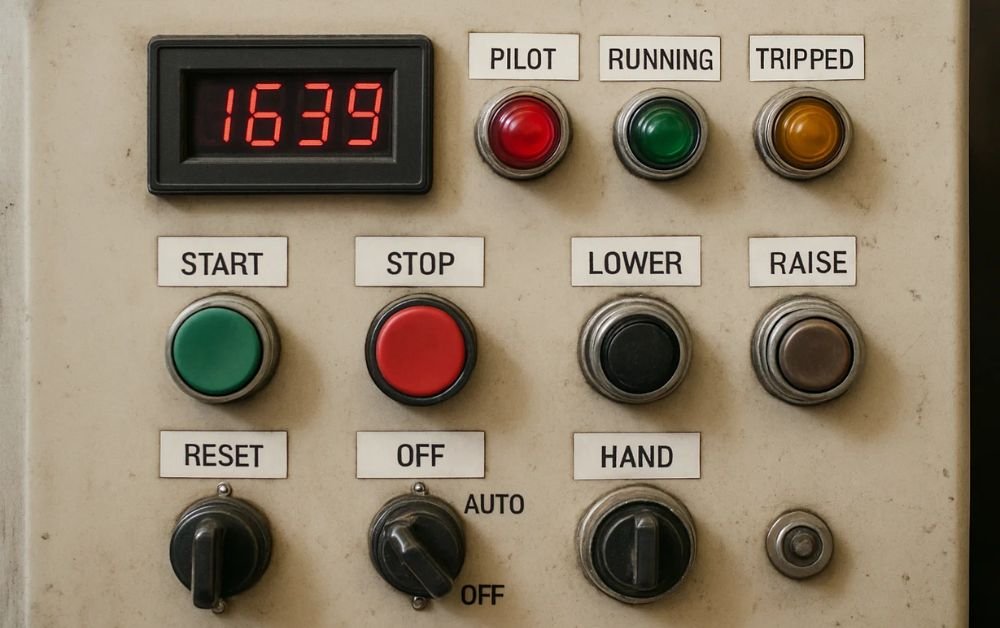
The landscape of industrial control panels and automation systems is changing at a breathtaking rate, from simple analog control boxes to intelligent, AI-driven, interconnected systems, reflecting how fast technology redefines manufacturing and industrial operations. With industries worldwide embracing this culture shift, businesses that wisely invest in modern automation realize efficiency, flexibility, and long-term resilience. If you’re considering upgrading your systems, sourcing from a reputed Control Panel supplier in Uganda, like Blackwood Hodge Power Services Ltd, will ensure you get not just quality hardware but an all-encompassing, future-ready automation solution. Their expertise in integrated power, material handling, water solutions, and control panels positions them well to support industries seeking to ride the next wave of automation transformation.