
This blog discusses how modern seawater RO systems help in bringing down operational costs, what technological advances drive that reduction, and how a company such as Blackwood Hodge positions itself to help industrial operators in Uganda achieve those savings.
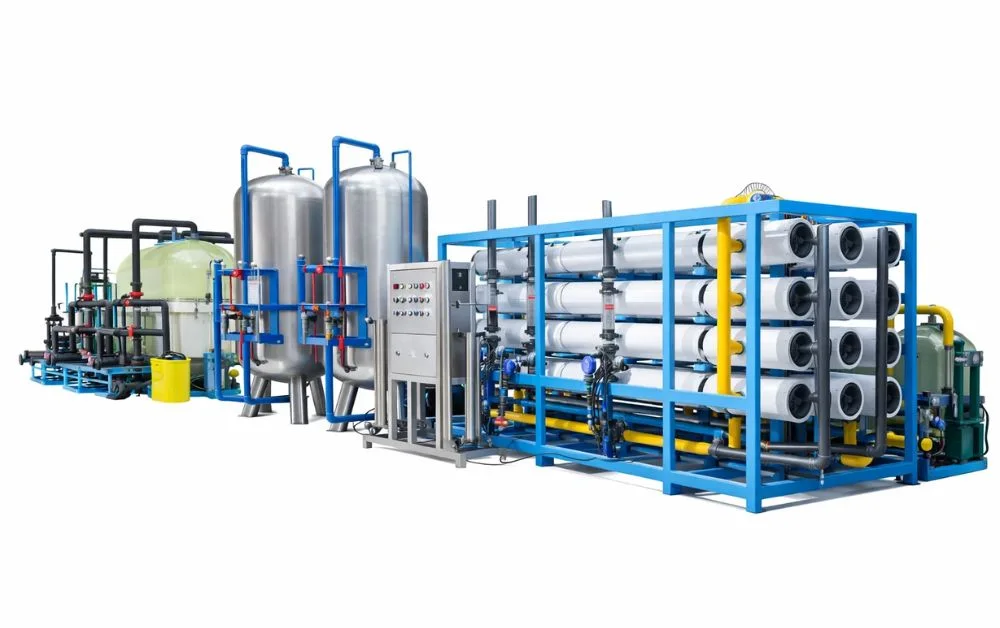
1. Cost pressures that drive adoption
There are considerable industrial cost pressures on sourcing, treating, transporting, and disposing of water or wastewater in manufacturing, power generation, mining, or even hospitality. In some areas, freshwater or groundwater sources might also be an unstable, costly, and a regulatory risky option. Coastal or near-coastal plants, in contrast, have access to plentiful seawater, but it needs to be treated before being used. The desalination systems of today’s era turn this resource into process or potable water, therefore reducing the burden on finding and utilizing freshwater (which is uncertain) to treating consistent feedstock.
Industrial players are in search of robust alternatives due to growing water scarcity and increasing demand in Uganda and the East African region. It is here that Industrial Seawater RO Desalination Systems in Uganda present themselves as a compelling alternative, provided they are supported by service providers with local presence and technical capability, such as Blackwood Hodge.
2. How modern Seawater Reverse Osmosis Desalination Plants minimize operational cost
Contemporary RO systems for seawater work through various saving mechanisms:
a) Energy efficiency improvements
In desalination, energy cost is typically the most significant OPEX factor. Increasing use of advanced membranes, energy-recovery equipment automation, and pretreatment systems has lowered specific energy consumption considerably. For instance, modern SWRO plants have achieved feedwater specific energy consumption down to ~3-4 kWh/m³ or less. Improved pretreatment and fouling control reduce the pumping pressure required, thereby lowering electrical costs.
b) Reduced maintenance & membrane replacement costs
Membrane fouling and scaling lead to downtime, chemical cleaning events, and the need for early membrane replacements, all of which increase operating cost. Modern systems with improved pretreatment, monitoring, and control contribute to extending the life of the membranes, reducing the frequency of cleaning, and hence decreasing associated maintenance OPEX and downtime.
c) Steady, reliable water supply = predictable cost structure
Moving onto a captive seawater RO system provides a more predictable cost base for water in industries, removing the risk of sudden supply cost hikes from external freshwater sources or regulatory changes. Lower risks mean that budgeting is more straightforward with fewer emergency interventions and less downtime due to water supply interruptions.
d) Environmental/regulatory cost avoidance
Drawing fresh water or extracting groundwater on a large-scale count as a threshold that can cause the application of regulatory or environmental obligations, penalties, and extra costs in many jurisdictions. Seawater (with appropriate intake/outfall and brine management design) offers industries a way to reduce these dependencies. That also affords them options, for their water cost to be part of their value proposition — sustainability credentials, say, not a liability.
e) Modular, scalable deployment
Modern RO desalination solutions often come in modular or skid-mounted units that reduce capital risk and enable staged deployment. Lower-cost incremental build-outs help match capacity to demand. This reduces overinvestment and allows cost savings to be realized sooner.
Related read:-Top Technologies Shaping the Future of Water and Sewage Solutions in Uganda
3. Key design & operational levers for cost-reduction
In order to fully realize the cost benefits, industrial users should focus their attention on the following design and operational levers of a modern seawater RO system:
- The optimal pretreatment: will remove suspended solids, organics, and scaling ions before RO membranes to reduce fouling and increase membrane life.
- High recovery ratio: Whereas seawater RO allows the recovery of ~40-50% of feedwater as permeate, optimization to higher recovery (where site feedwater allows) reduces feed volume and improves cost per m³.
- Energy Recovery Devices (ERDs): With newer systems, hydraulic energy is recovered from the high-pressure concentrate stream; this significantly increases energy efficiency.
- Automation and monitoring: Real-time monitoring of membrane differential pressure, salt rejection, fouling rates, etc., enables proactive maintenance to avoid costly unscheduled shutdowns or cleaning events.
- Brine/outfall management: appropriate design of the concentrate discharge minimizes environmental impact and associated regulatory cost and can, in some cases, offer opportunities for mineral/brine resource recovery.
- Integration with power & industrial systems: Large industrial users who have co-located on-site power generation (for example, co-located with a power plant) generally have the possibility of using waste heat for thermal desalination or integrating with the power supply in order to reduce the incremental cost of electricity.
4. Role of Blackwood Hodge Power Services Ltd
As industries in Uganda and East Africa consider their water supply options, what is needed is a partner with local knowledge, technical capability, and integrated service. Blackwood Hodge Power Services Ltd. is well-placed to fulfill this: offering integrated power, material handling, and water solutions, they particularly promote “Industrial Seawater RO Desalination Systems in Uganda.”
Their value proposition includes:
- Design, supply, installation, and maintenance of seawater RO plants according to industrial demand profiles.
- Local presence in Uganda, Kampala (Industrial Area), providing easy access for service, maintenance, and spare parts.
- Experience across both power and industrial sectors means they are capable of integrating water systems with existing infrastructure, such as cooling water, process water, or power plant feed, to maximize cost savings.
For industrial operators looking to save costs on water operations, it means having a one-stop partner to assess, configure, deploy, and manage the seawater RO system to provide total lifecycle cost, not just upfront capital, optimally.
5. Realizing cost reduction in practice – an implementation roadmap
The following is a recommended roadmap for industrial operators in Uganda or similar countries for the reduction of operational costs through modern seawater RO desalination:
1. Water demand and source assessment
- Quantify current water use- m³/day, quality requirements: process grade, potable, cooling make-up.
- Weigh freshwater options (expense, dependability) against seawater availability: intake logistics, proximity, salinity, and marine environment.
2. Feasibility and cost-benefit modelling
- Estimate CAPEX & OPEX for different options of seawater RO systems, including energy, membranes, pretreatment, and brine disposal. The benchmark cost data should reflect modern systems (not legacy).
- Model savings: reduced electricity, reduced downtime, fewer external water purchases, and regulatory avoidance.
3. Technology selection & sizing
- Choose the system with high-efficiency membranes, energy recovery, and a modular design.
- Size pretreatment and intake/outfall infrastructure properly (costs often underestimated).
4. Integration with facility operations
- Align intake, pretreatment, RO, and post-treatment with industrial process: cooling water, process water, and potable water.
- Exploit synergies with power or other utilities, such as waste heat and co-location benefits.
5. Installation and commissioning with a partner
- Engage a supplier/installer with experience, local presence, and service capability: in this case, a provider like Blackwood Hodge.
- Ensure training, commissioning, performance guarantees, and measurement protocols.
6. Operate and monitor for cost optimisation
- Track key cost metrics: energy kWh/m³, chemical cleaning frequency, membrane life, downtime, recovery ratio, salt rejection.
- Use monitoring data for refining the operation, scheduling preventive maintenance, managing brine discharge, and optimizing recovery.
7. Continuous review and scaling
- As the water demand increases, modular systems allow for scalable build-out.
- Periodic technology refresh (e.g., new membranes, automation upgrades) maintains a low-cost base.
Conclusion
Above all, a modern seawater RO desalination solution is an industry operator’s strategic lever to potentially offset operation cost reduction vs. parts of the world where fresh water is scarce or very expensive to acquire, and reliability matters. When considering energy efficiency, membrane performance, and the ability to integrate with industrial processes, the savings start adding up quickly. In short, having Industrial Seawater RO Desalination Systems in Uganda accessible with a reliable counterpart means business entities within that area are better placed to leverage the benefits from the technologies today. By working with a supplier that is informed about local requirements, water integration with power and industrial infrastructure, and offers lifecycle support, you can take your efforts beyond just technology deployment into sustainable cost-cutting and operational resilience.