When Industrial Seawater RO Systems Are Required
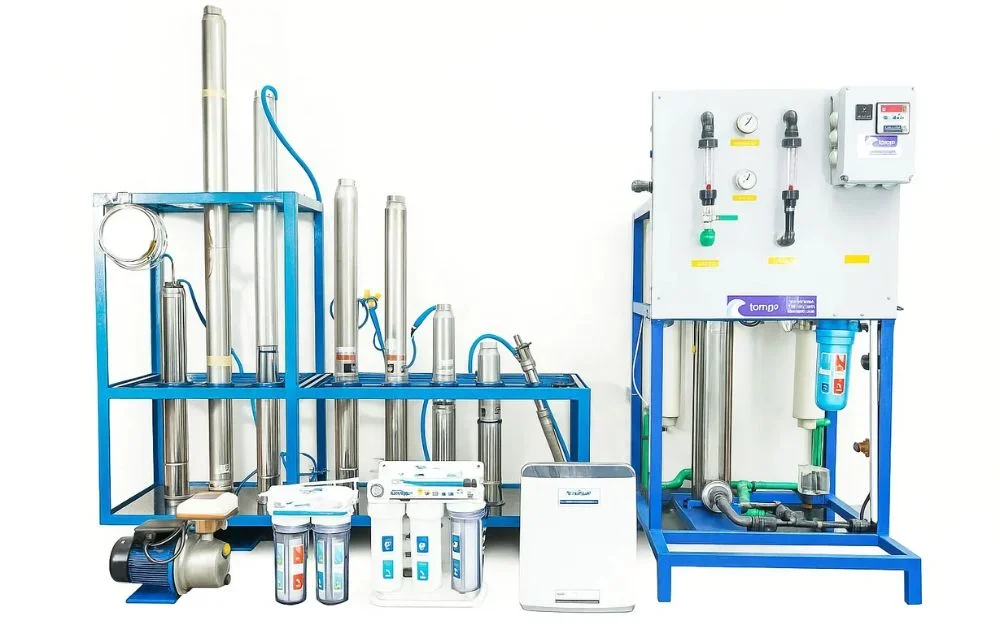
Industrial reverse osmosis systems are required in situations where the source water has a very high total dissolved solids content that conventional treatment cannot adequately reduce, where the process requires ultra-pure water with very low mineral content, or where water reuse programs within the facility create water streams with elevated contaminant concentrations requiring advanced treatment before recirculation. Industries including food and beverage manufacturing, pharmaceutical production, power generation boiler water preparation, and electronics manufacturing all have water quality requirements that drive the need for industrial-grade RO and demineralization systems within Uganda.
Brackish Water RO Treatment in Uganda
Uganda’s groundwater in certain regions — particularly in areas with geological formations that contribute dissolved minerals — can have elevated salinity levels making it unsuitable for direct industrial use without treatment. Brackish water reverse osmosis systems are specifically designed for these lower-salinity feedwaters, operating at lower pressures than seawater desalination and achieving higher water recovery rates. The design of a brackish water RO system must account for the specific ion composition of the source water, as certain ion combinations require specific pre-treatment to prevent membrane scaling and fouling. Blackwood hodge Uganda conducts thorough water analysis before designing any RO system to ensure the solution is properly engineered.
System Components and Design
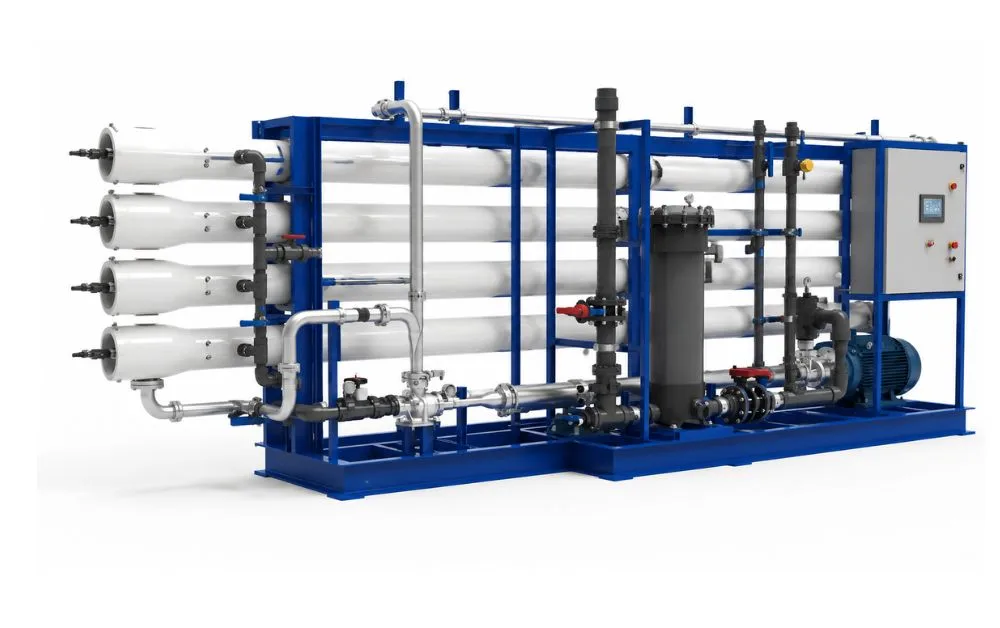
A complete industrial seawater RO system comprises several integrated stages. Pre-treatment — including multimedia filtration, softening or antiscalant dosing, and cartridge filtration — prepares the feedwater for the membrane stage by removing suspended solids and controlling water chemistry. The RO membrane stage uses pressure and semi-permeable membranes to separate purified permeate from concentrated reject. Post-treatment conditions the permeate for its intended use — adjusting pH, adding minerals where required for stability, or providing further purification for ultra-high-purity applications. A control system monitors and manages the entire process with instrumentation for pressure, flow, conductivity, and pH throughout every stage of operation.
Related read:-How Do Industrial Seawater RO Desalination Systems Compare to Traditional Water Treatment Methods?
Energy Efficiency in Industrial Desalination
Energy consumption is one of the most significant operational cost factors in any reverse osmosis or desalination system, because the high pressures required to drive water through membranes demand substantial electrical energy. Modern industrial seawater RO systems incorporate energy recovery devices — including pressure exchangers and turbochargers — that capture energy in the high-pressure concentrate stream and use it to pre-pressurize incoming feedwater, significantly reducing net energy consumption. Variable speed drive pumps that adjust pressure in response to changing feed conditions further improve energy efficiency. Blackwood hodge Uganda specifies energy-efficient components and configurations in all industrial RO system designs.
Maintenance and Life Cycle Management
Industrial seawater RO membranes and system components require systematic maintenance to maintain performance and extend operational life. Membrane cleaning — using chemical cleaning solutions that restore permeate flow and rejection rate when fouling reduces performance — must be performed at regular intervals based on system performance monitoring. Membrane replacement at the end of their useful life — typically after five to ten years depending on operating conditions and maintenance quality — must be planned and budgeted. Blackwood hodge Uganda provides comprehensive maintenance support for all industrial water treatment systems, including membrane cleaning services, performance monitoring, and planned maintenance programs that keep systems operating at design performance throughout their life.
Successfully delivering an industrial water treatment project in Uganda requires project management that coordinates the engineering design, equipment procurement, civil construction, mechanical installation, electrical and instrumentation work, testing, and operator training that make up a complete installation. Blackwood hodge Uganda manages all of these elements for clients who prefer a turnkey solution, taking responsibility for coordinating all subcontractors and delivering a fully commissioned and tested system ready for handover to the client’s operations team.
Project Management for Industrial Water Treatment Installations
Post-installation performance testing — verifying that the installed system achieves its specified permeate quality, flow rate, and recovery ratio under actual operating conditions — is a critical quality assurance step that Blackwood hodge Uganda performs for all industrial water treatment installations before handover. This testing confirms the system design has been correctly implemented.
Conclusion
Industrial seawater RO desalination systems in Uganda and advanced industrial water treatment solutions address the water quality requirements of Uganda’s most demanding industrial applications. Whether you need a complete seawater desalination plant Uganda for a remote industrial facility, industrial seawater RO systems Uganda for process water production, or specialist water treatment engineering for a specific industrial application, Blackwood hodge Uganda provides the technical expertise and quality equipment that industrial clients require. Contact Blackwood Hodge Power Services Ltd today for industrial water treatment consultation.