
To businesses within Uganda and East Africa, businesses such as Blackwood Hodge Power Services Ltd are leading suppliers of integrated solutions that do not just offer the services of power and water but also fire safety equipment and expertise that are relevant to the real-life needs.
Understanding Fire Risks in Commercial & Industrial Environments
Fire behaviour in commercial buildings like offices, shopping malls, and warehouses is also different from that in industrial buildings with heavy machinery, flammable materials, and complex electrical installations. Fires in the industrial environment may propagate quickly, particularly in places where flammable liquids or high-temperature processes or equipment that is closely packed are found. On the same note, commercial structures where people are crowded, with several floors, or isolated areas need systems that can identify and react to an incident in real time.
In Uganda, the fire and rescue services operate under regulatory standards, which are harmonized with international standards, such as NFPA (National Fire Protection Association), to stipulate the requirements on fire detection, fire alarm, sprinkler systems, hydrant systems, and suppression equipment to ensure the protection of the occupants and minimization of damages even during fire incidents.
Types of Fire Fighting Systems to Consider
When it comes to selecting the right firefighting system, it is best to know the functionality of each component and its suitability for your building. This is a breakdown of the most important systems:
1. Fire Detection and Alarm Systems
The first defence is detection. Smoke, heat, or flame sensors connected to the control panel and alarms guarantee early warning, which allows the occupants time to evacuate, and the responders have a head start. There are conventional, addressable, and wireless systems, which are an option depending on the size and complexity of the building.
Key benefits:
- Issue an early warning about fire breakouts.
- Warns the occupants and the emergency responders.
- Frequently associated with the monitoring services of remote notification.
2. Automatic Sprinkler Systems
The sprinkler systems release water automatically when the heat is detected, and this controls or puts out the fire before it spreads. These are commonly required in fire safety regulations in commercial and industrial structures. Types of the available ones are wet pipe, dry pipe, pre-action, and deluge, each being specific to the environment.
Advantages:
- Real-time response without human intervention.
- Minimizes the structure and fire spread.
- Would result in reduced insurance premiums.
3. Fire Hydrant Networks & Pumps
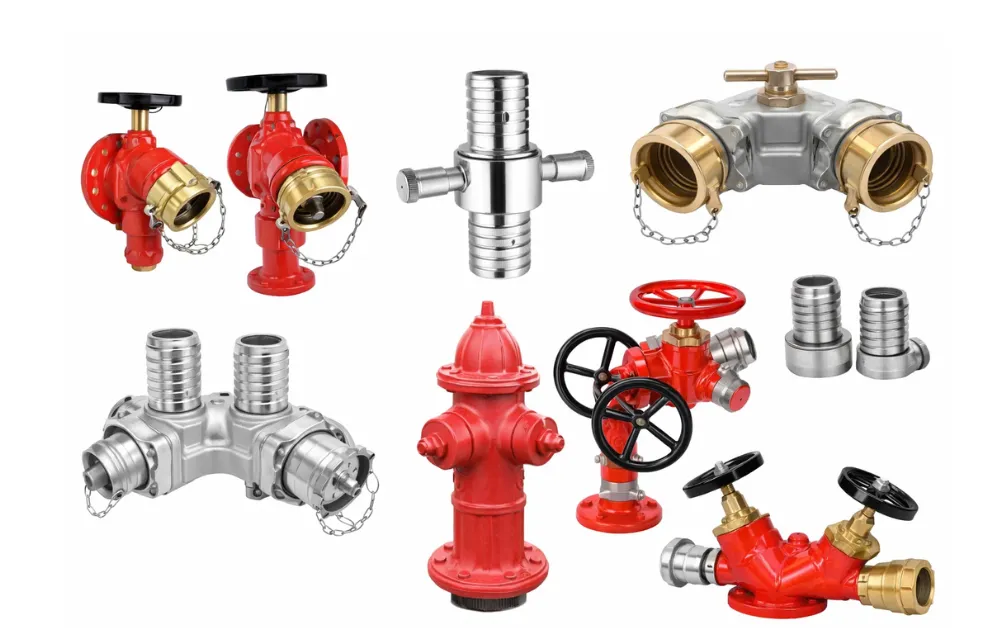
Hydrant systems distribute firefighters or trained personnel high-pressure water, which ensures the control of larger fires. The fire control in large facilities is based on these networks, supported by properly sized pumps.
Considerations:
- Hydraulic design should be done properly to match the pressure and flow requirements.
- The pumps should be of good quality, and there should be a standby power supply.
4. Portable Fire Extinguishers & Hose Reels
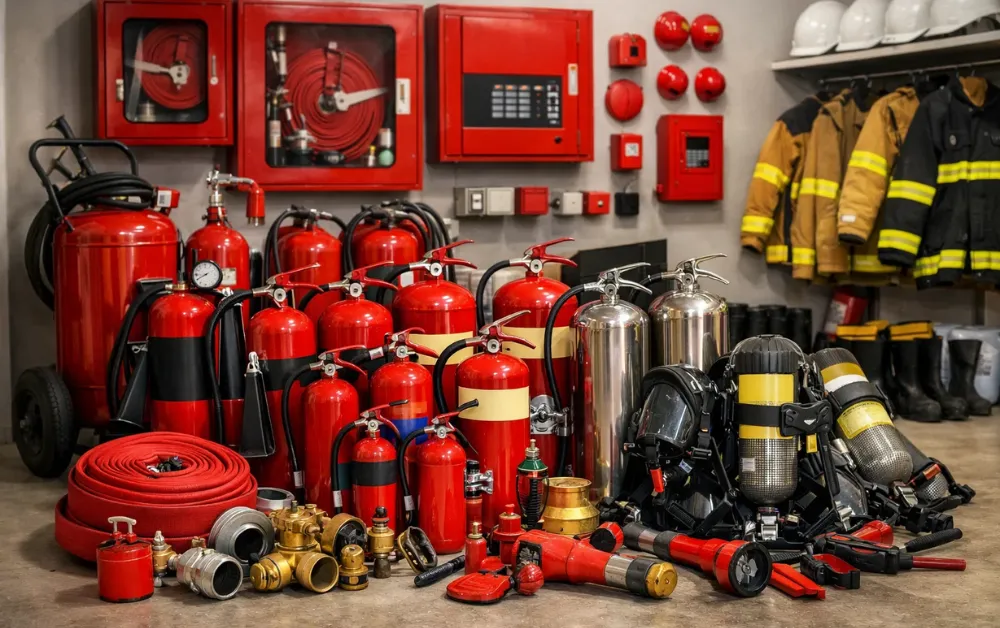
They are necessary to ensure a first response and are strategically situated in all buildings. Extinguishers are available in different varieties, which include water, foam, dry powder, and CO2, and each is designed to address a specific type of fire (e.g., electrical, flammable liquids).
5. Specialized Suppression Systems
Clean-agent or gas-based suppression systems can be used in places where water can cause damage to equipment (such as a server room or a laboratory). Kitchen suppression systems are essential to the hotel and commercial kitchens.
Related read:-How Do Fire Fighting Systems in Uganda Meet Safety Regulations?
Factors to Evaluate When Choosing a System
The choice of the optimal firefighting system is not limited to the type of equipment you use, but rather a combination of this equipment into a unified solution that fits your risk profile. Here’s what to focus on:
Risk Assessment & Building Use
Carry out a comprehensive fire risk assessment, which entails occupancy, fire load, hazardous material, and possible igniting sources. This tells the correct combination of detection, suppression, and alarm systems.
Compliance with Regulations
Make sure your system complies with local building codes, and with such international standards as NFPA 13 (sprinkler installation) or NFPA 20 (fire pump installation). Compliance is not only occupant protective, but it can also save on the costs of insurance and enhance regulatory approvals.
Scalability & Future Growth
Select systems that would be able to grow with your facility. The modular designs can be upgraded without the need to revamp the entire design.
Reliability & Maintenance
Fire systems should be available at the behest and call. Training your team is one of the services that ensures operational readiness, along with regular inspections, certifications, and service contracts.
Why Partner with a Trusted Provider
The process of selecting, installing, and maintaining fire protection systems is a technical and safety-related challenging activity. It is here that a reputable provider comes in. Blackwood Hodge Power Services Ltd is a leading provider of integrated power, material handling, and water solutions across East Africa, as well as providing quality fire safety equipment and expertise to international and local standards.
Their approach usually entails:
- Risk analysis and extensive consultation.
- Specification and design of the right fire systems.
- Installation, commissioning, and testing.
- Support, training, and maintenance.
Conclusion: Prioritizing Safety with the Right System
It is a safety, resiliency, and continuity investment before committing to any firefighting system in Uganda for your commercial or industrial building. An effective fire protection plan- comprising detection and suppression, alarm, and trained response is not only life-saving, but also protects property and downtime. With the backing of a trusted partner such as Blackwood Hodge Power Services Ltd, you will be assured of a comprehensive solution that targets the requirements of regulations, technologies, and pragmatics.
Fire prevention begins with informed decisions – and a decision to choose the right system may prove to be a decision that counts.